

Stop running the club on instinct
Every club manager has a feeling about which hours sell and who the good customers are. The feeling is usually half right — and it is the other half that costs money.
Your quiet hours, in black and white
A heatmap of hours against courts. Not a report you have to build — the view your club already produces every time somebody books.
- Hour by hour, court by court: the holes appear as holes, and so do the peaks you had not noticed.
- By sport, in a club that runs several: which one earns at which hour, rather than which one is loudest.
- Compared to the period before, so a quiet March reads as a quiet March and not as a disaster.
What actually comes in, without confusion
Money taken and money consumed are two different numbers, and mixing them is how a club talks itself into a good month it did not have. A ten-hour card bought in September is cash in September and revenue across the winter. The two views exist separately, and they are never mixed.
Screen by screen
Six real screens of the statistics module.
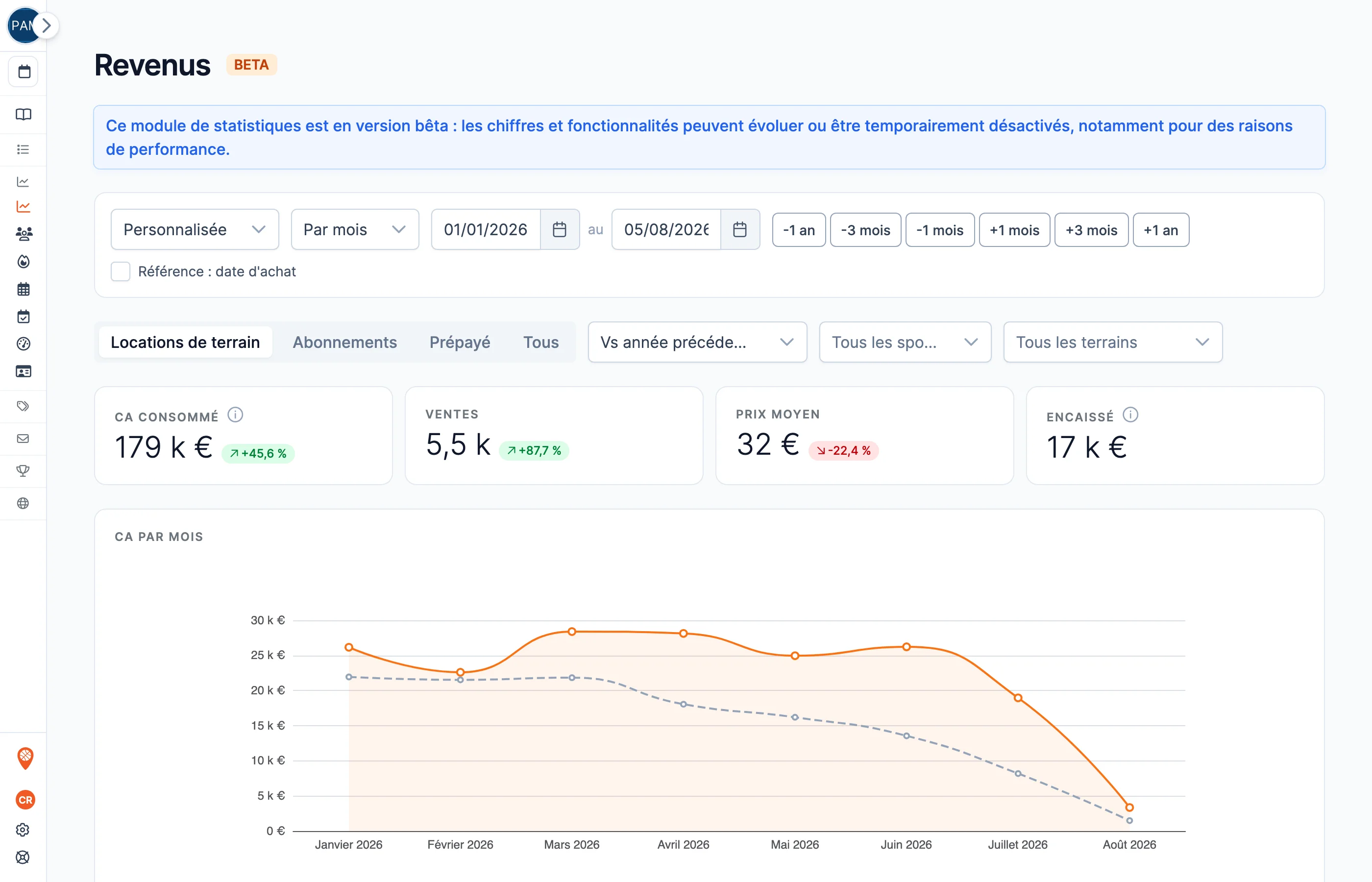
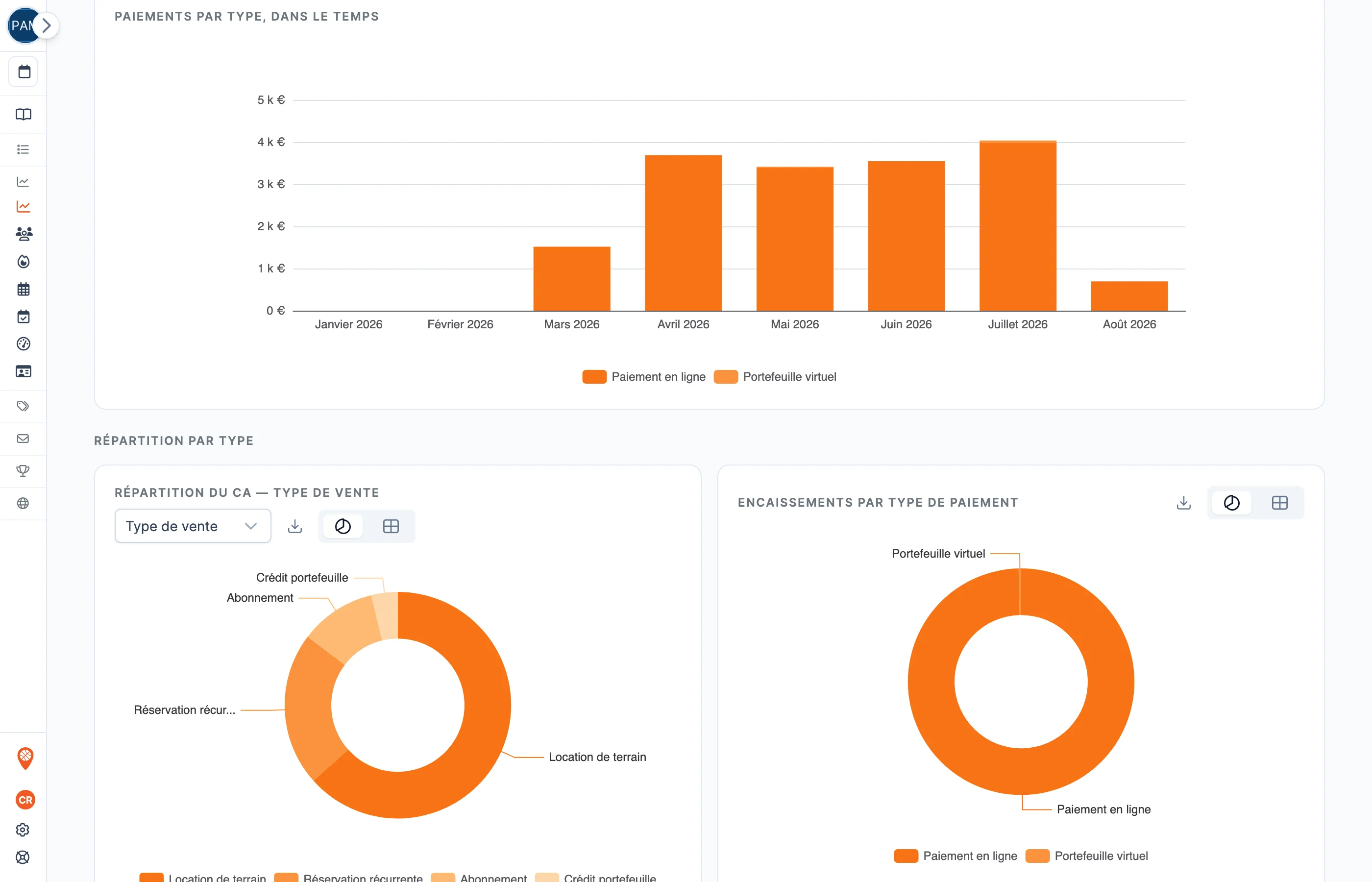
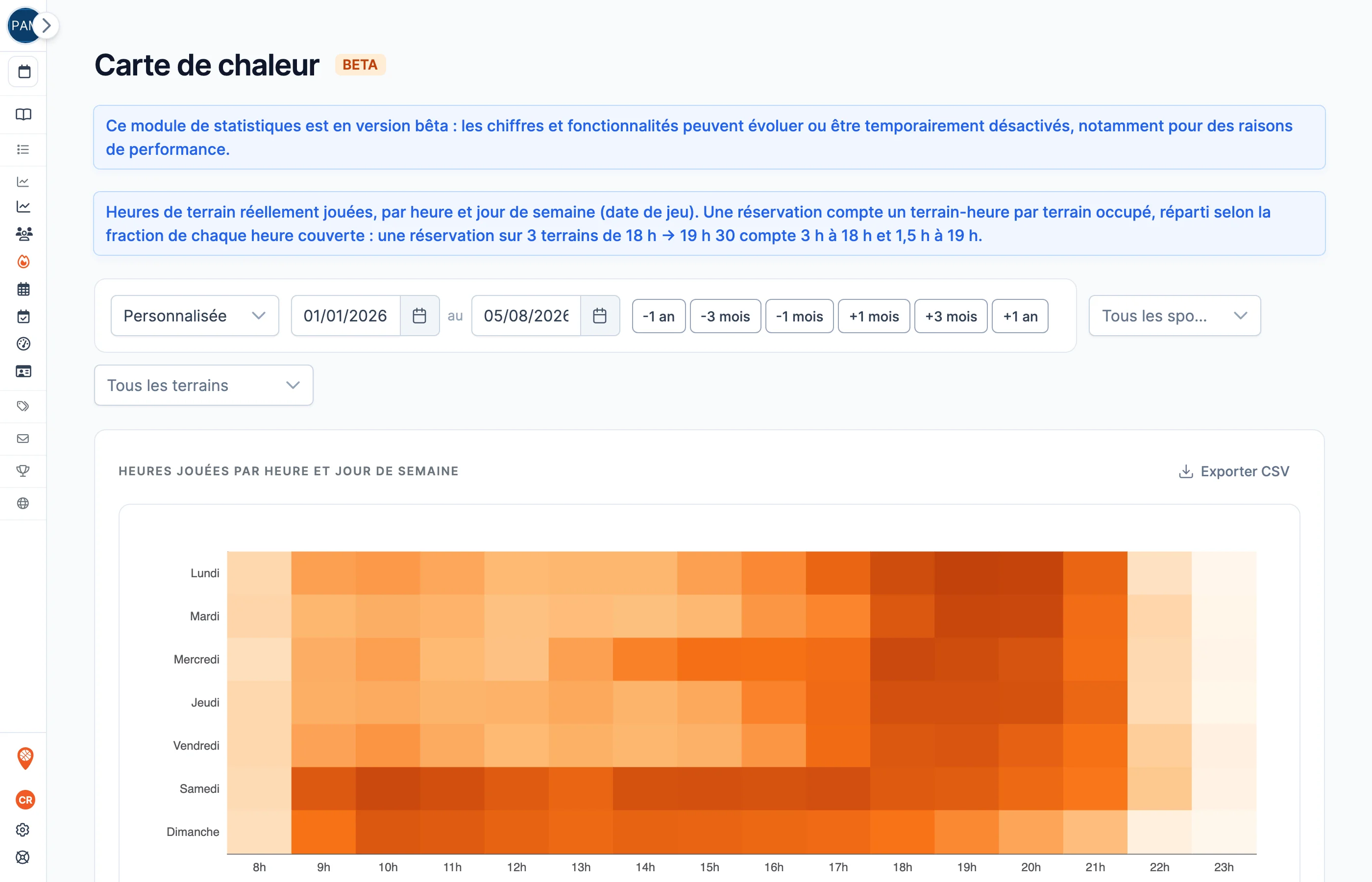
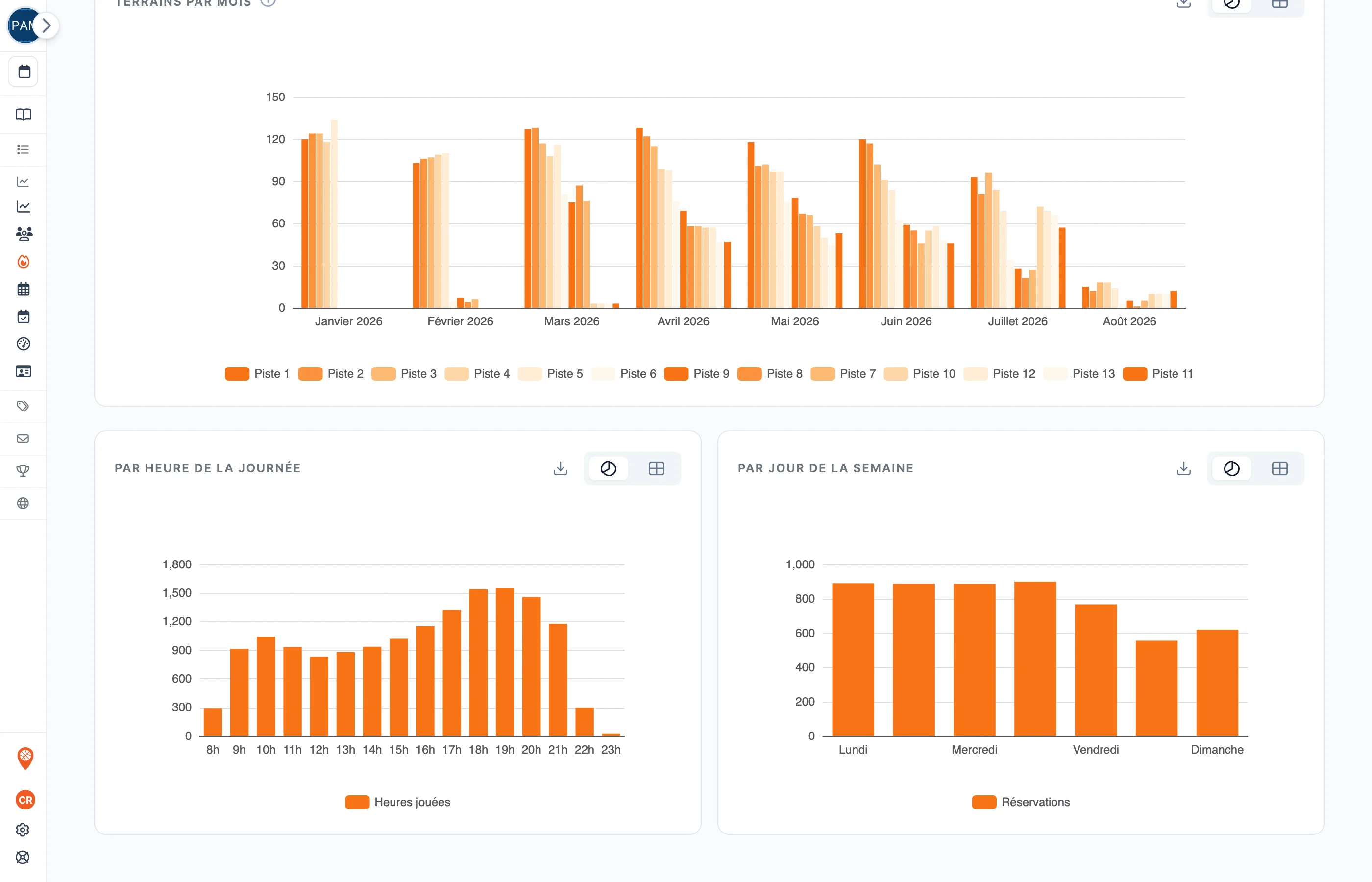
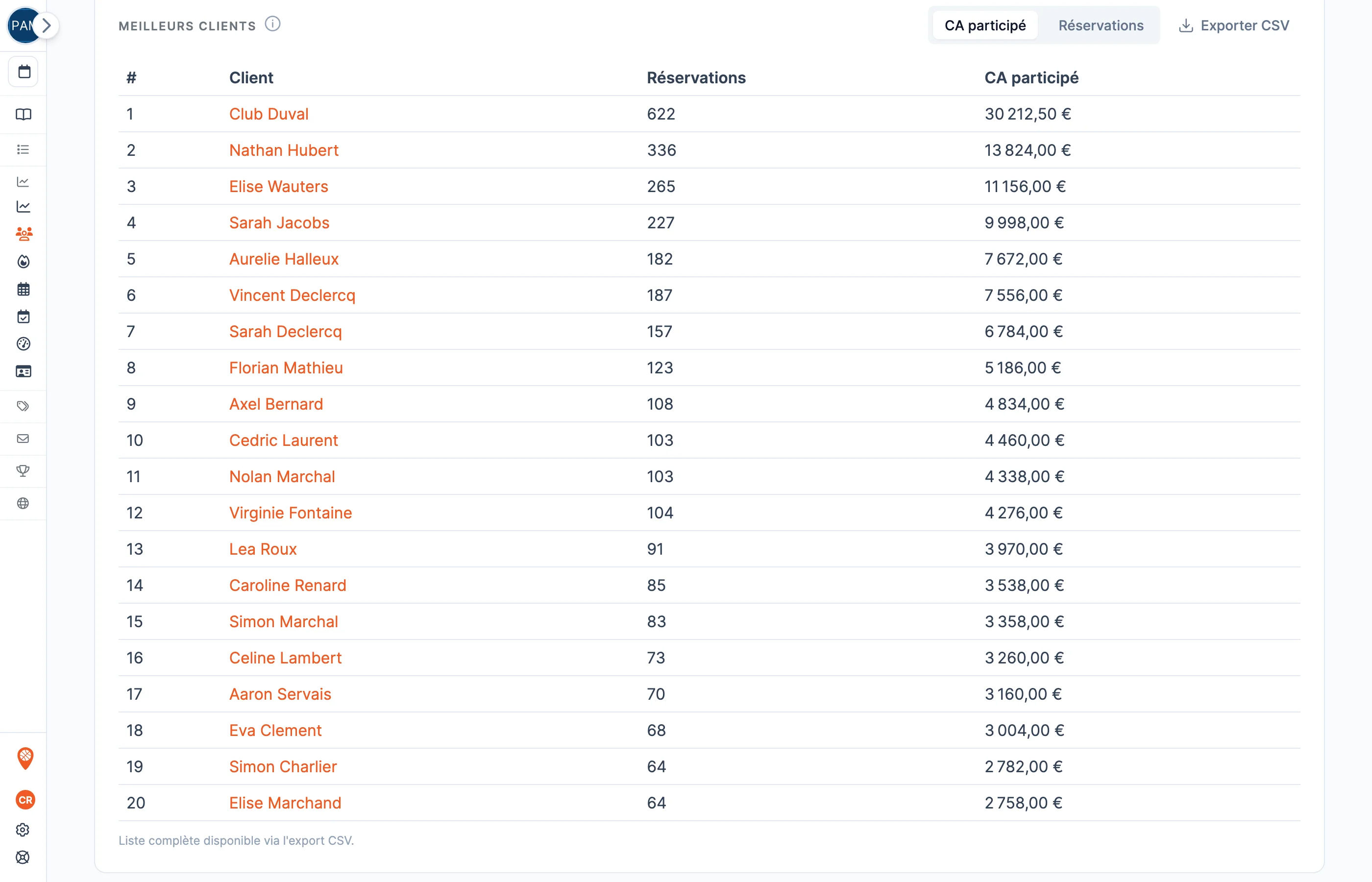
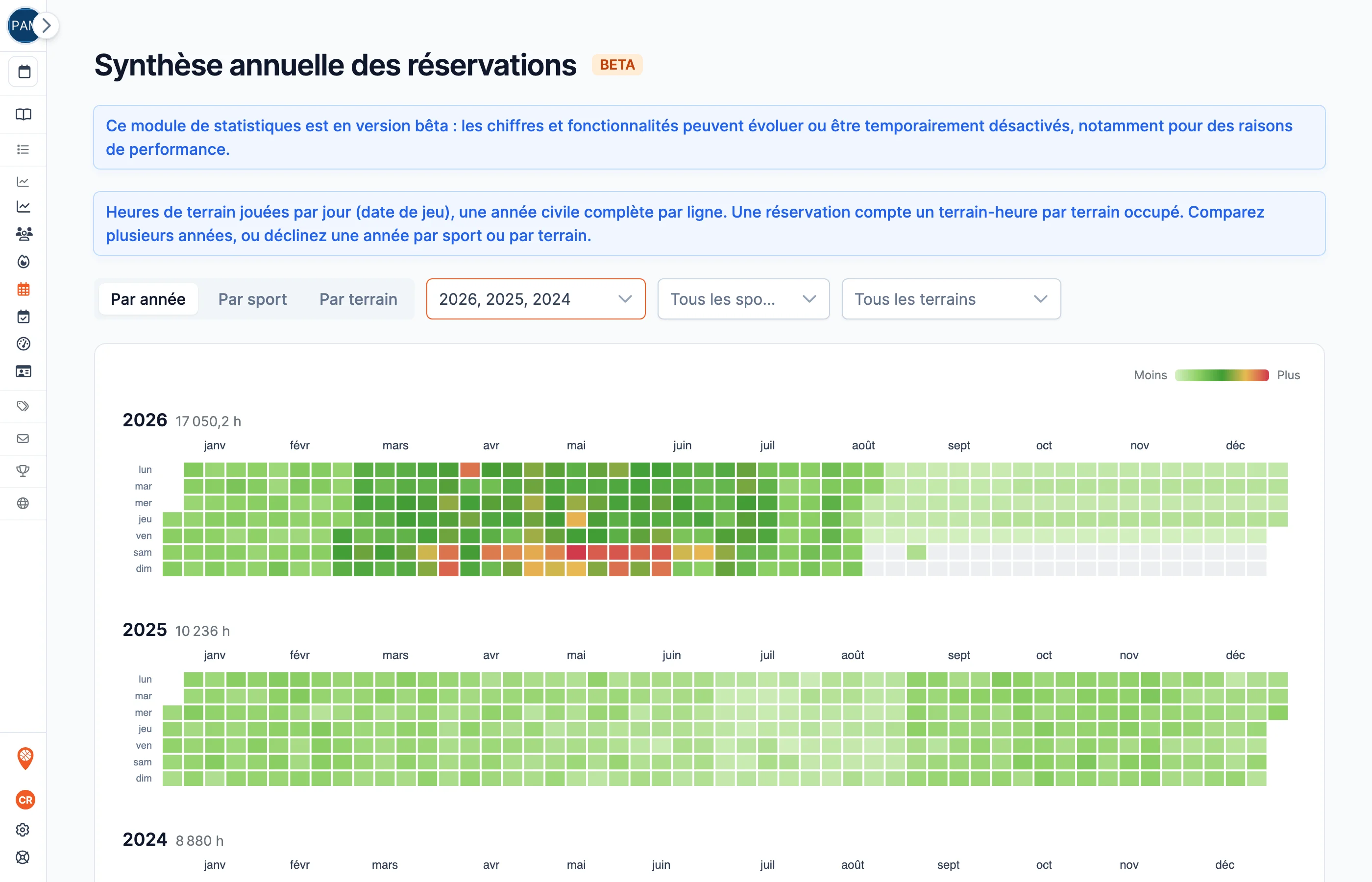
These figures come from a demonstration club, not from a real customer. We show you the screens, not somebody else’s takings.
They belong to you
Contacts, bookings, balances and rankings export whenever you decide, in a format your accountant can open. Reversibility is something you check before signing, not on the day you leave — and a club that cannot get its own numbers out does not really own them.
Thirty minutes to read your club in your own numbers
Bring your quiet hours and your season. We go through them with you — and we do not arrive with figures we invented.