Four players, one booking
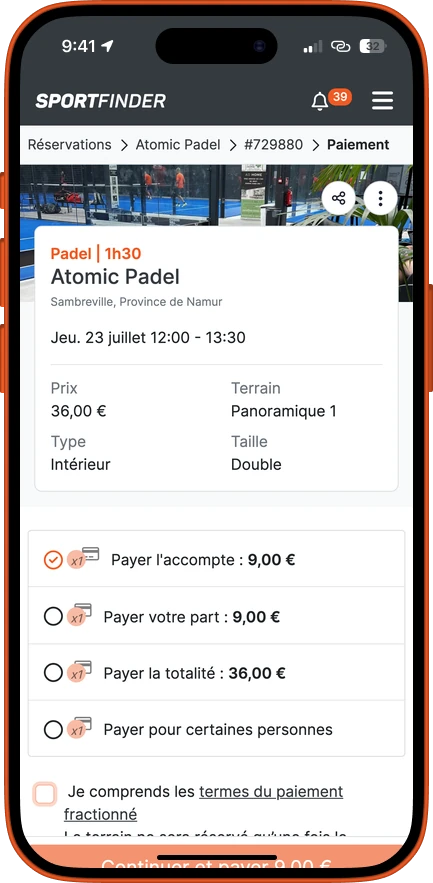
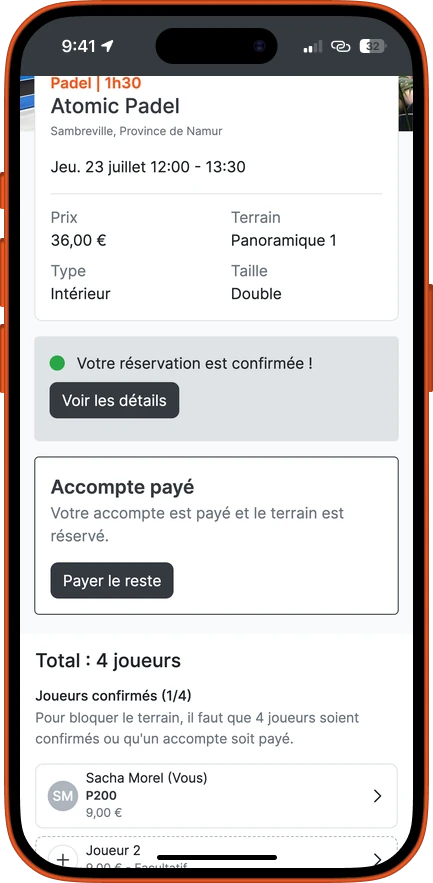
The amount is divided between the participants automatically. Everyone pays their exact share: nobody fronts the money for the others, and there is nothing to settle after the match.

Booking around the clock, partners matched by level, four players splitting one payment and QR-code access — one back office, and zero fees for your players.























Padel is played by four, booked in 90-minute slots, paid for by several people and lived as a community. A general-purpose court booking tool misses all of that. SportFinder was built around those rules: the booking, the match, the payment and access to the court are one single flow, not modules to wire together.
The amount is divided between the participants automatically. Everyone pays their exact share: nobody fronts the money for the others, and there is nothing to settle after the match.
A grid that belongs to padel: 90 minutes is the reference, and our engine does not put on sale a booking that would leave an unsellable gap between two matches.
Belgian, French and Spanish rankings handled natively, with the equivalences between federations: no file to import, no level to key in twice.
The question worth asking any booking system: when a player asks for one hour in the middle of two free ones, what decides whether to accept? With us it is not “the court is free” — it is what the booking would leave around it.
Because accepting an hour in the middle of two free ones means selling one hour and losing the two half-hours on either side. Our engine scores what each booking would leave behind, on a scale specific to padel, and only opens for sale what stays profitable — then it relaxes on its own as the date approaches, up to the point where an empty court costs more than a thirty-minute gap.
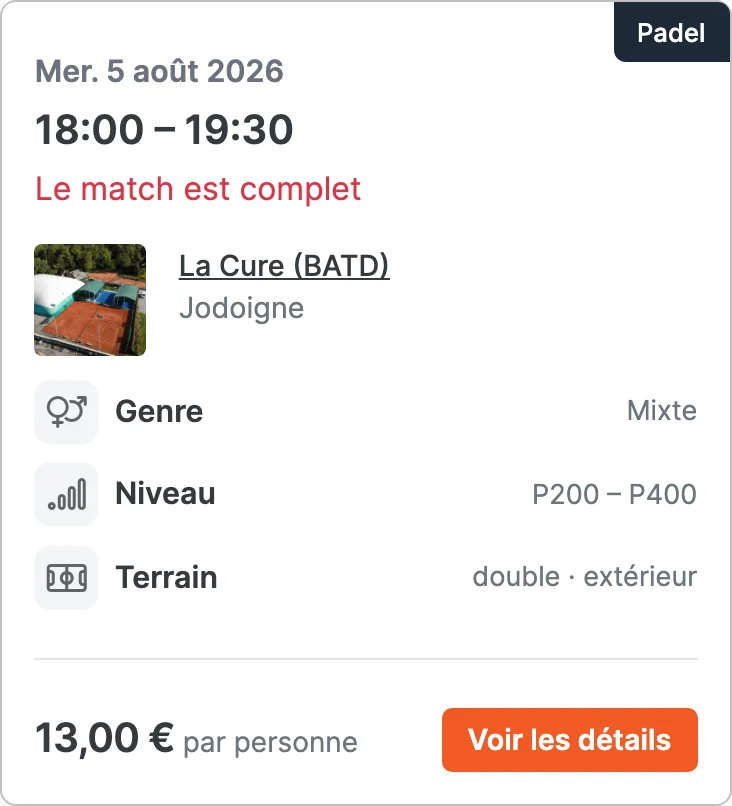
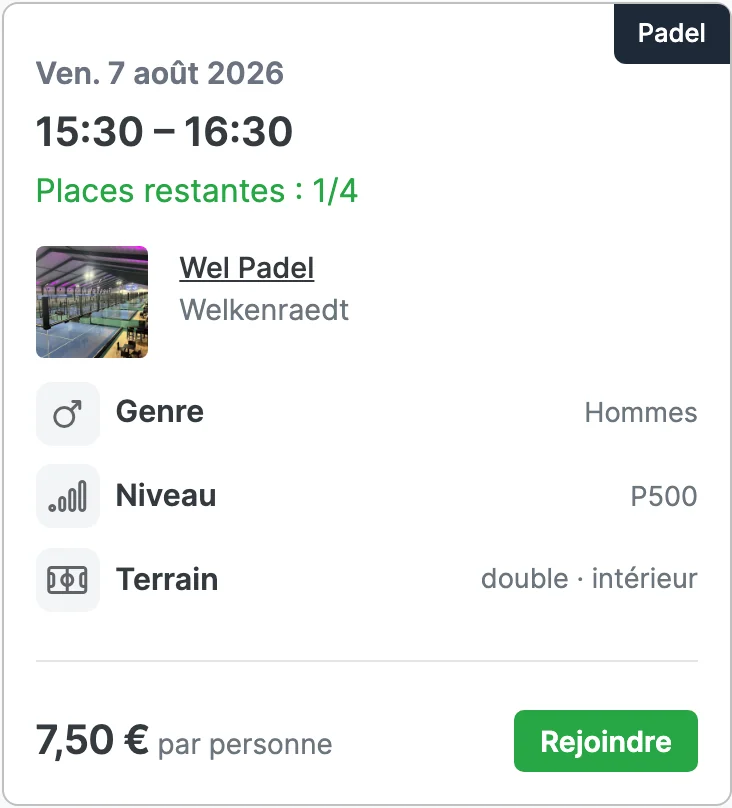
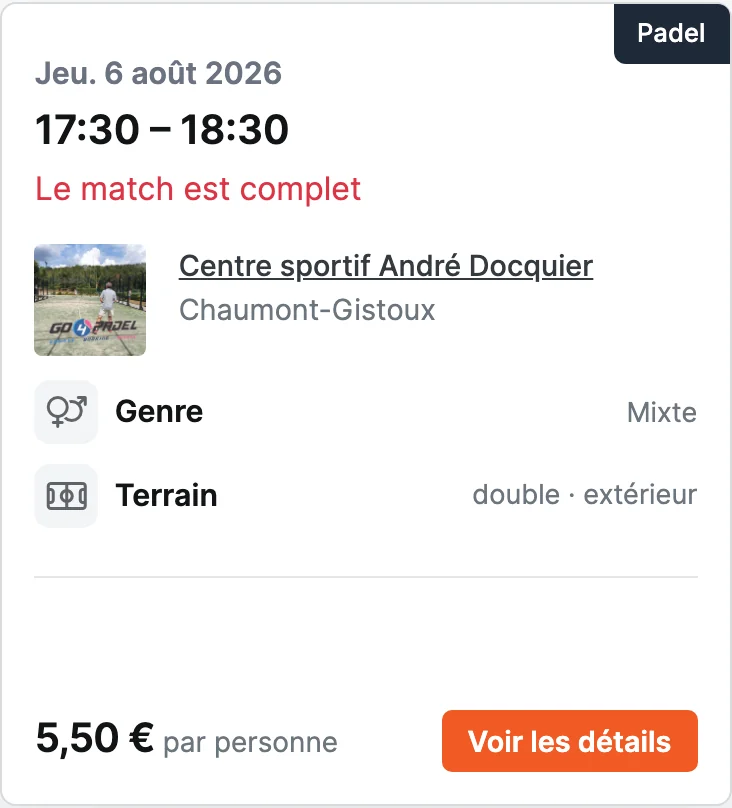
“My midday and 9pm slots stay empty.” In one click, turn any booking into an open match: you set the level, the gender and the number of places, and the SportFinder community fills the gaps. Matchmaking is not a separate module — it is your booking, opened up.
And because your club lives beyond its own walls, your courts and your matches appear in the SportFinder directory that players browse.
What your players see in the app — real open matches on SportFinder.
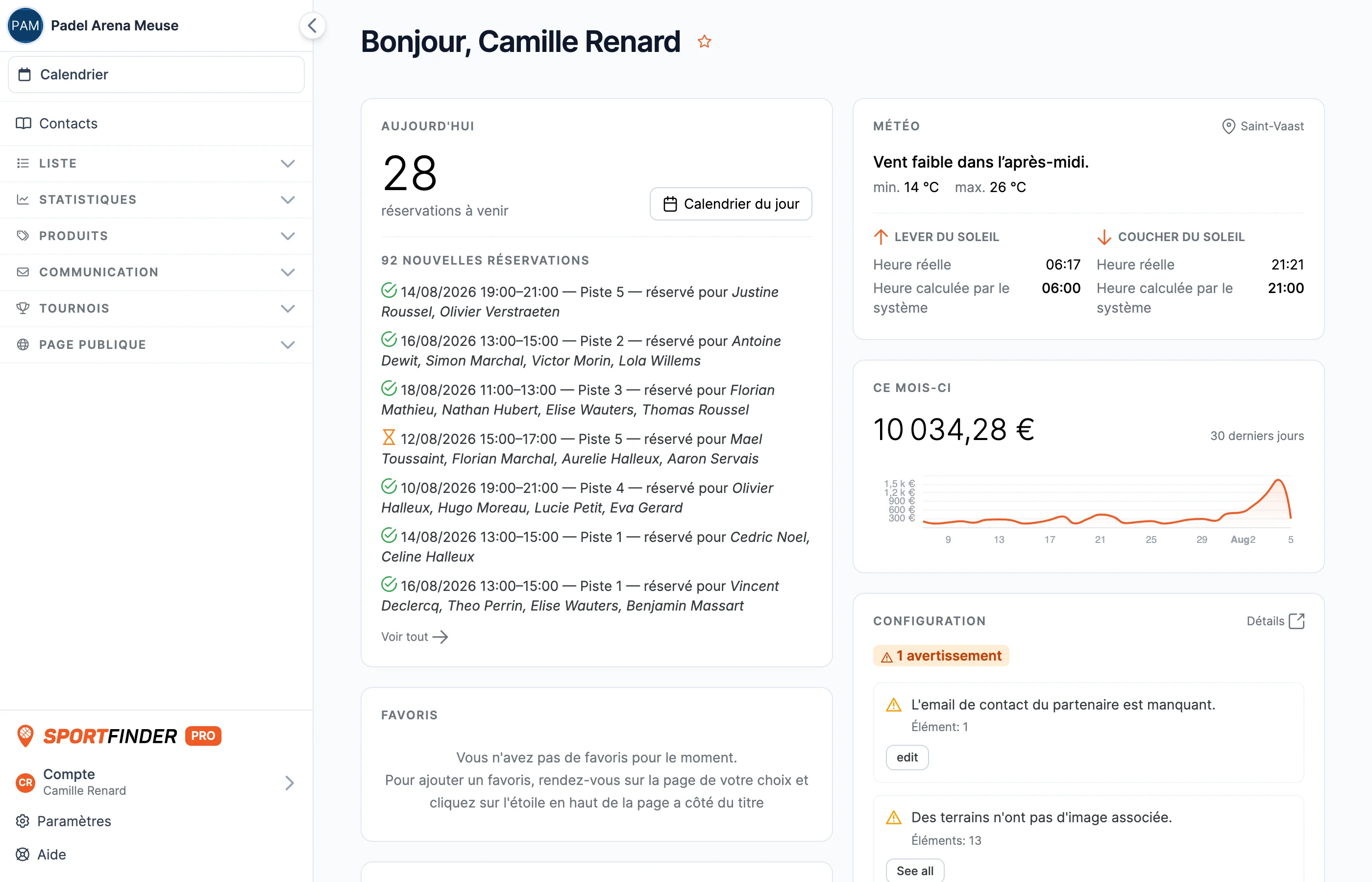
Behind online booking there is your team’s working tool: the dashboard, the calendar, the takings, the member file. Scroll through — these are real back office screens, not mock-ups.
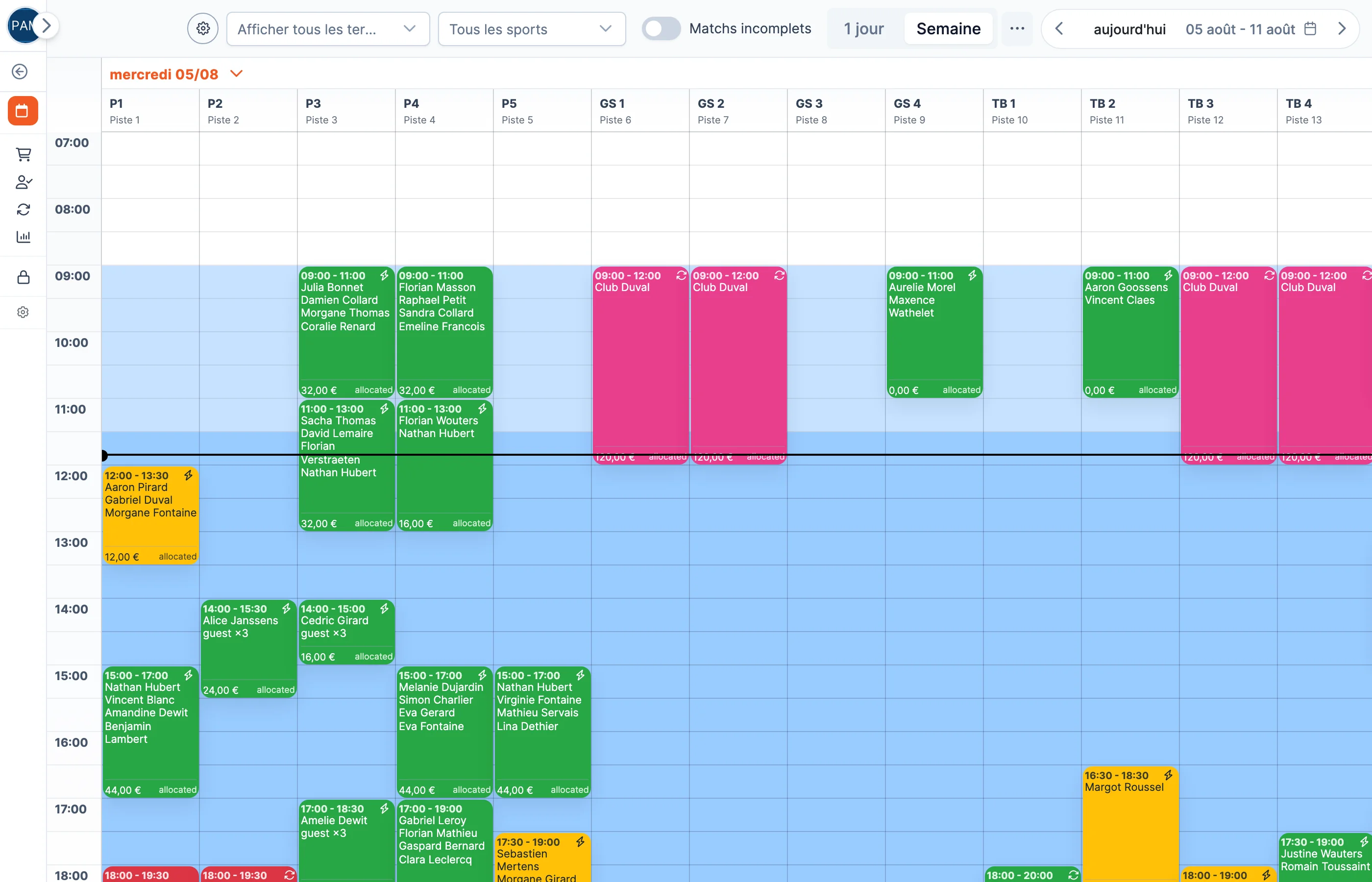
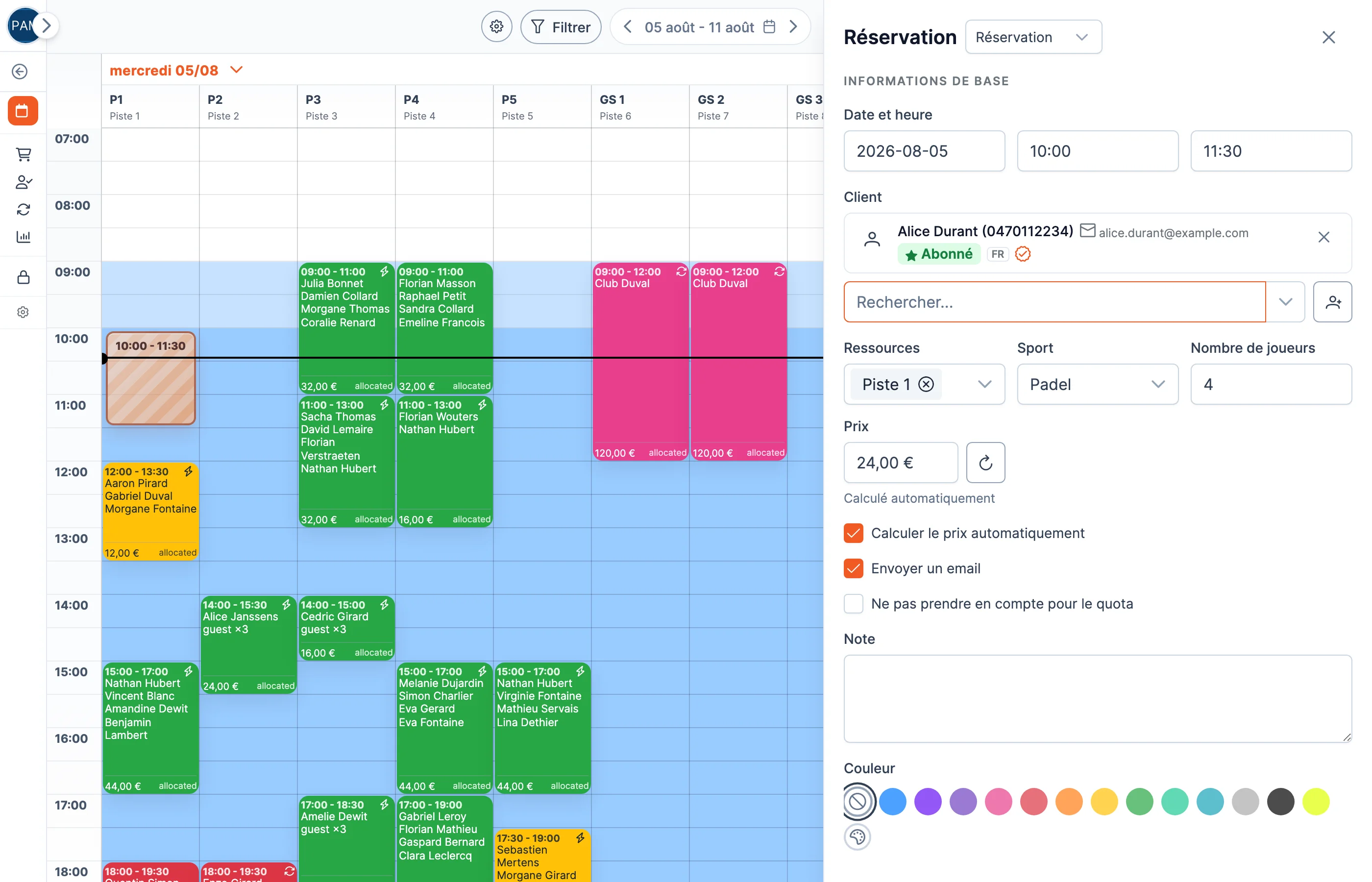
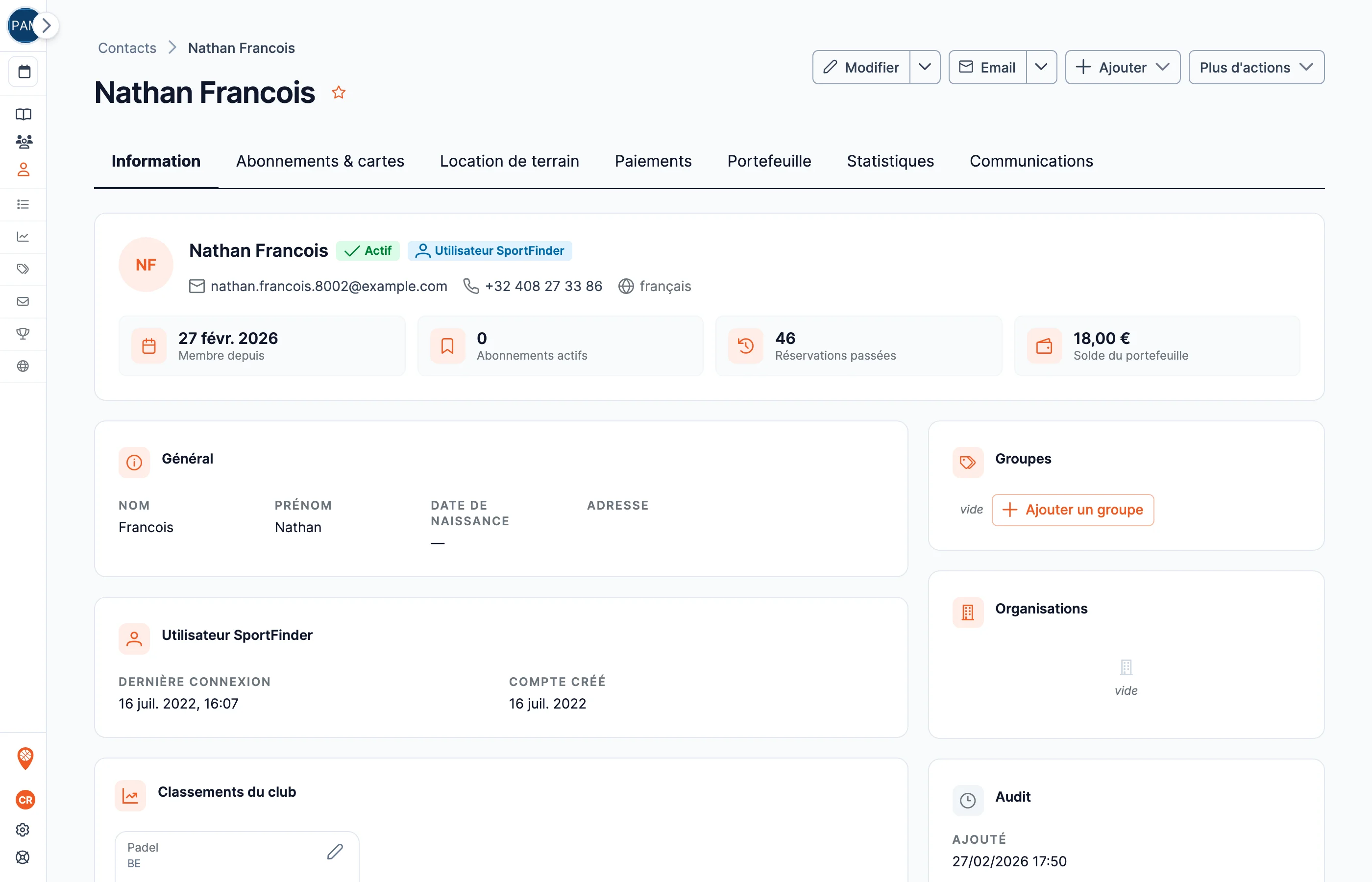
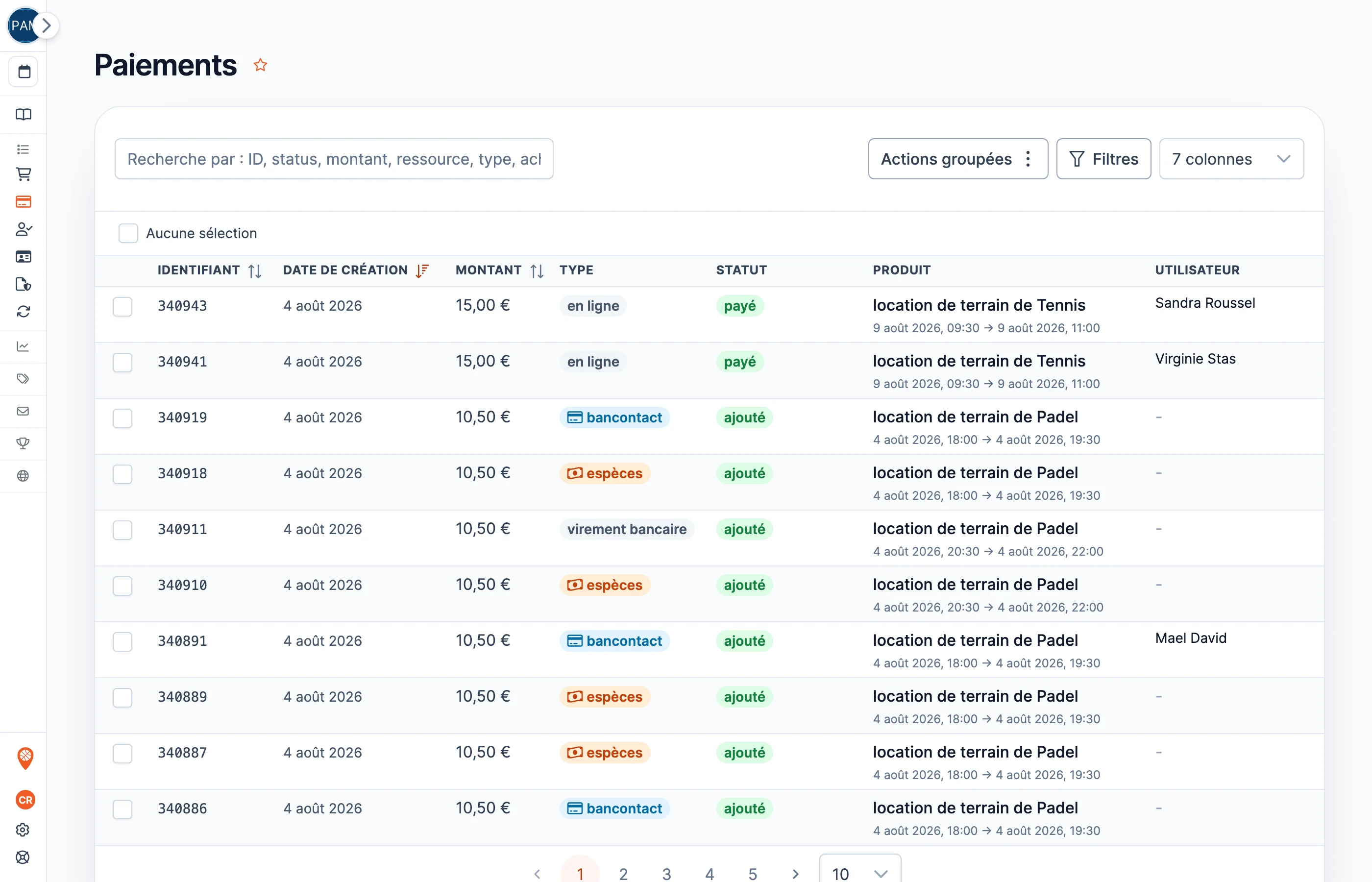
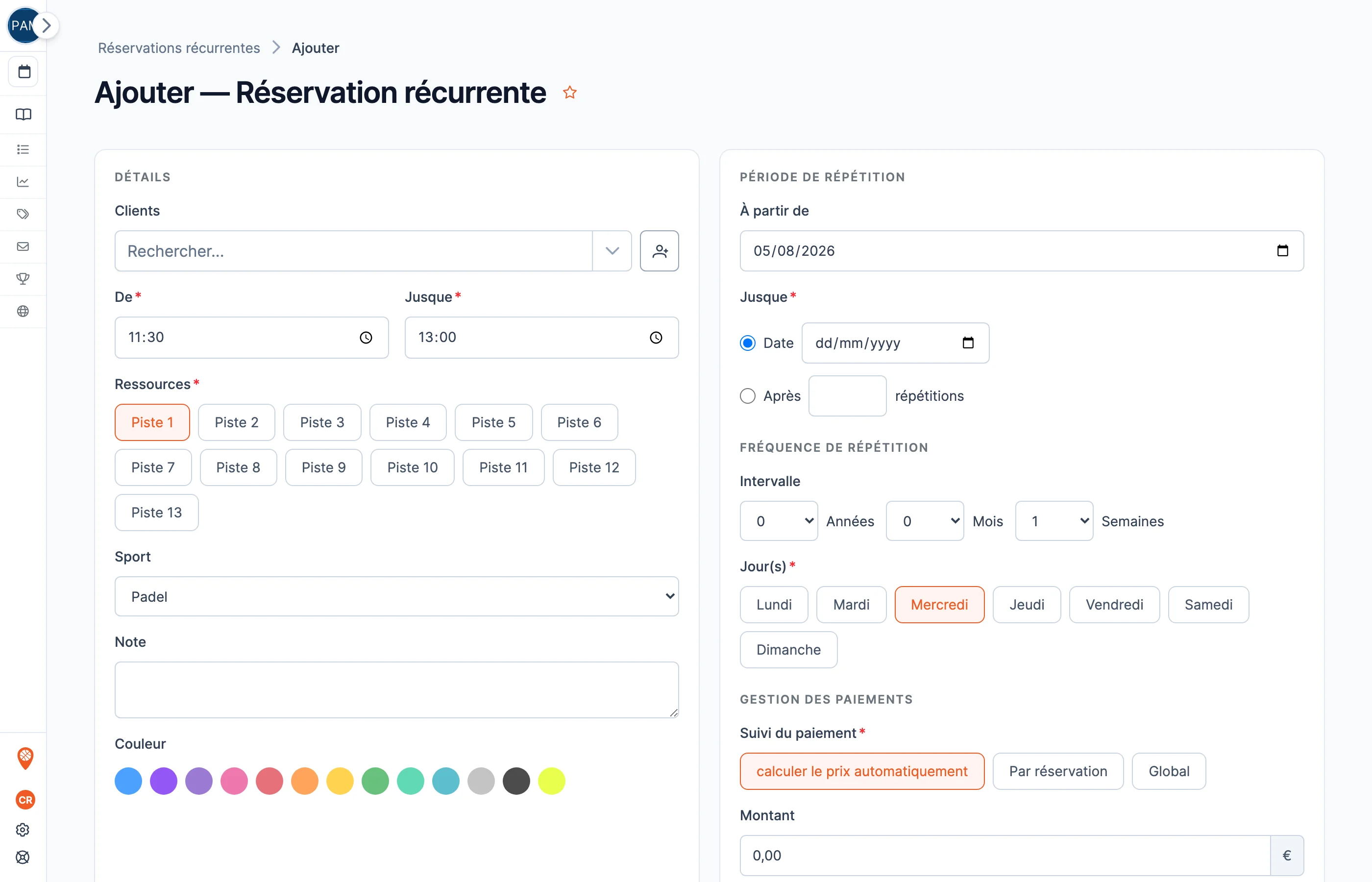
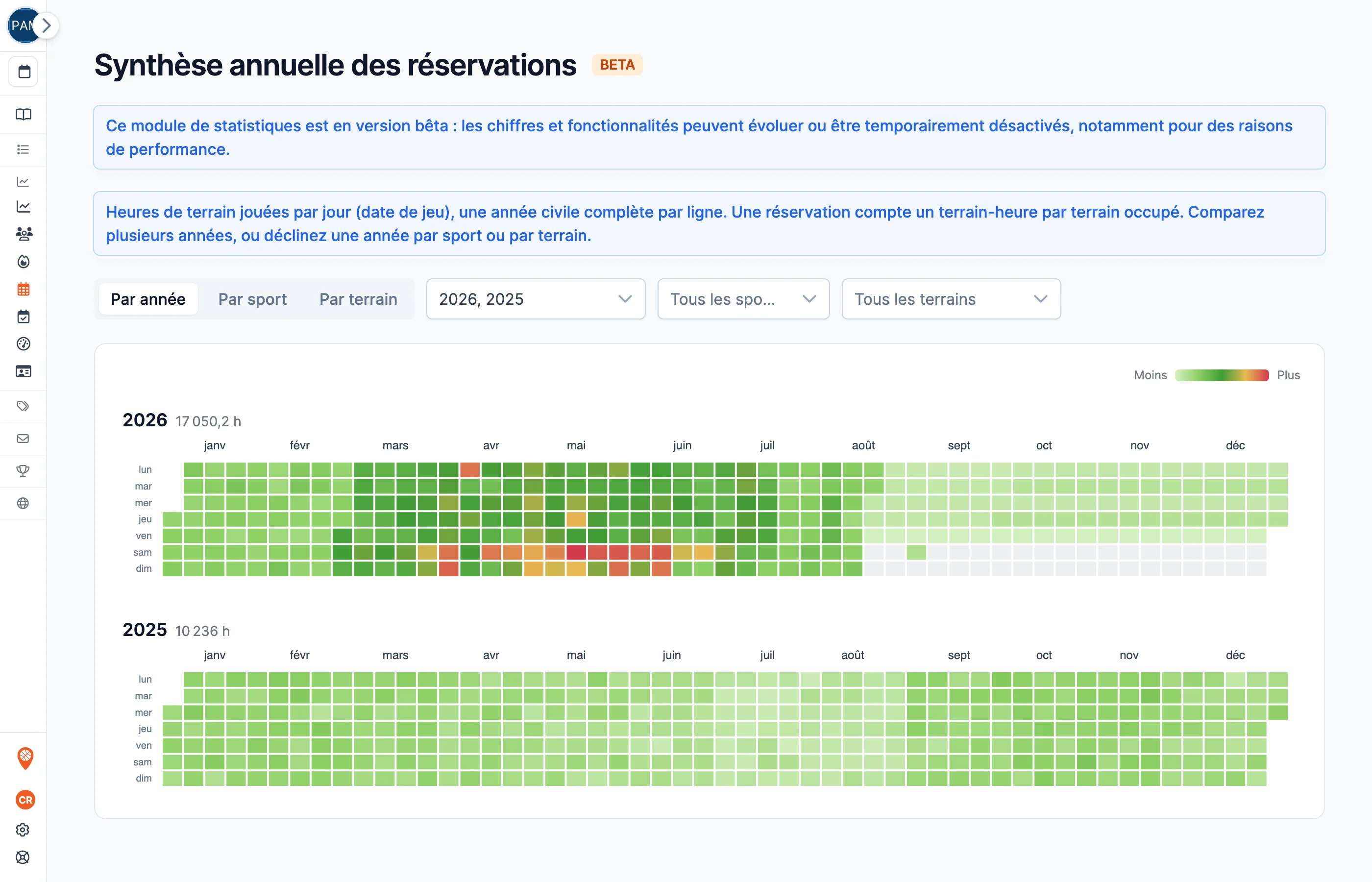
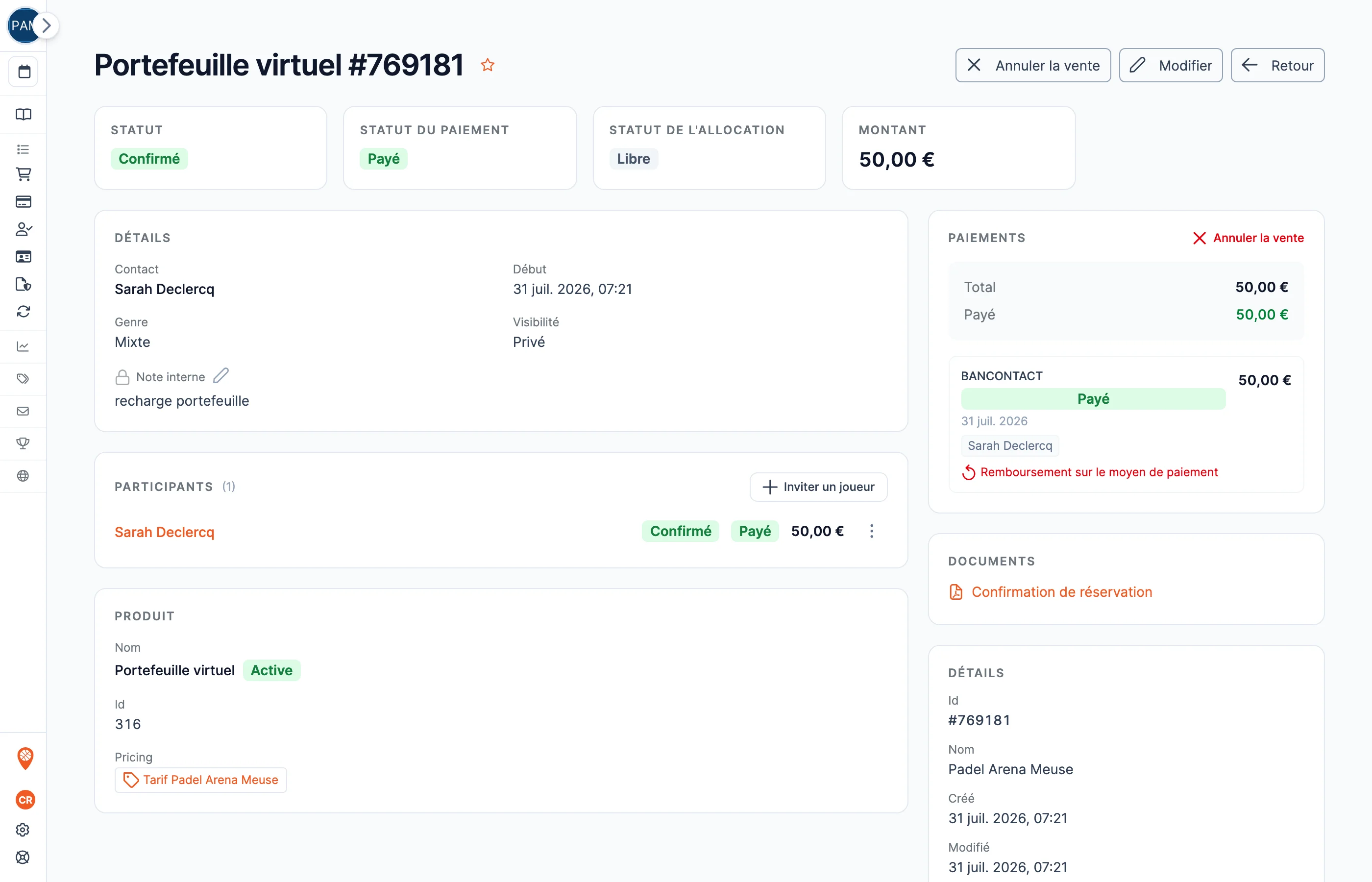
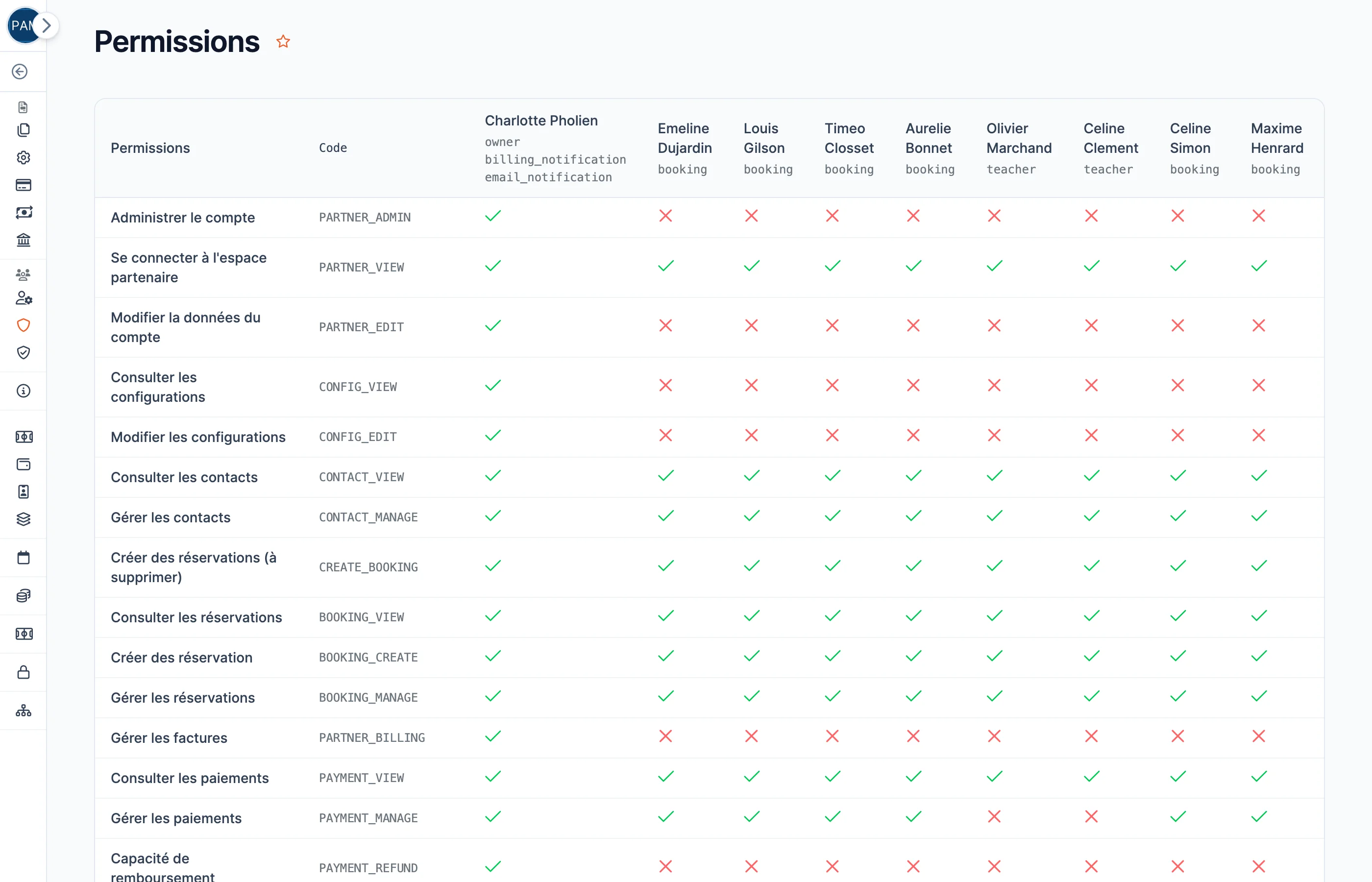
The SportFinder app is already in your players’ pockets — and your club has its page, its schedule and its rates in it. Here is one booking, screen by screen, as your players live it.
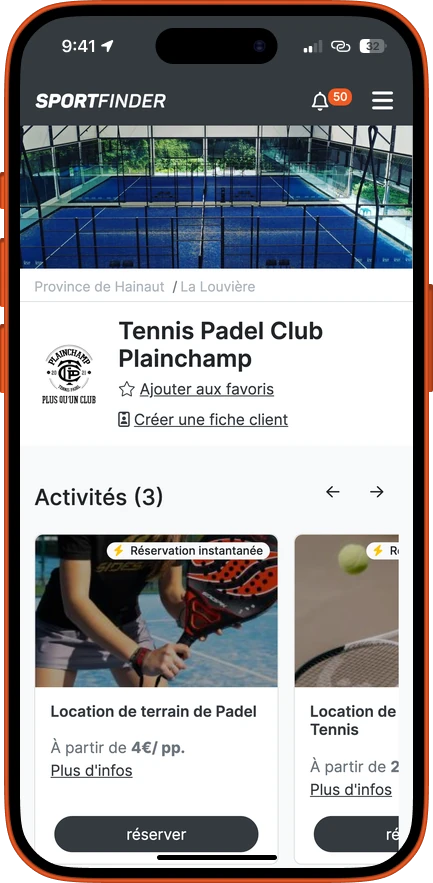
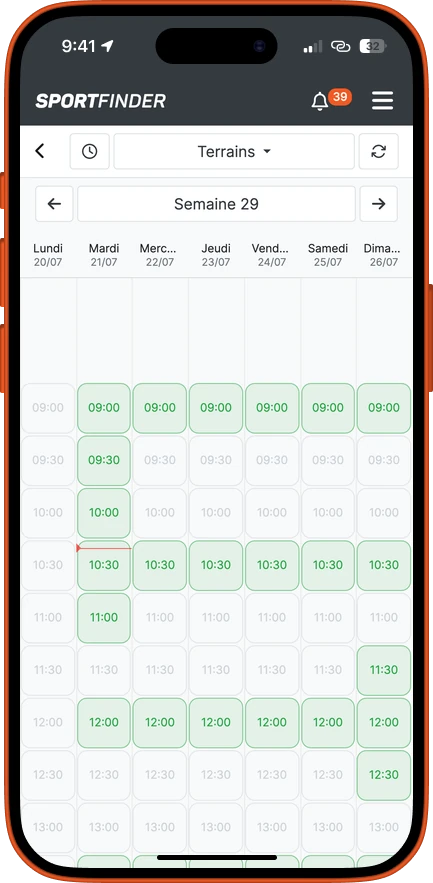
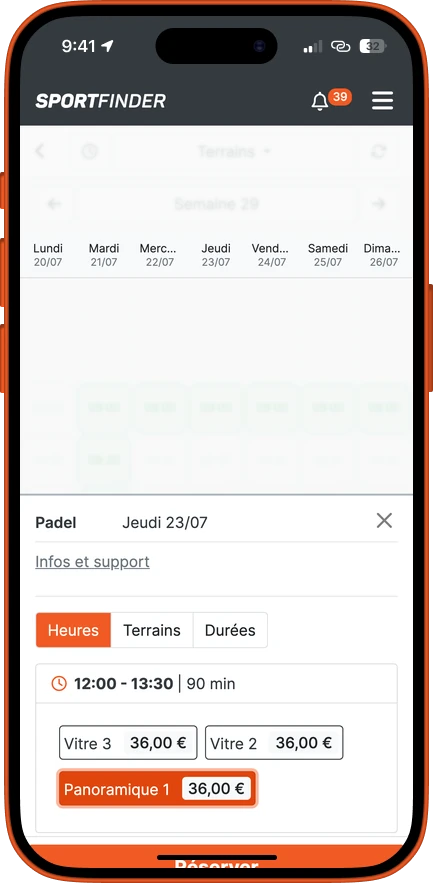
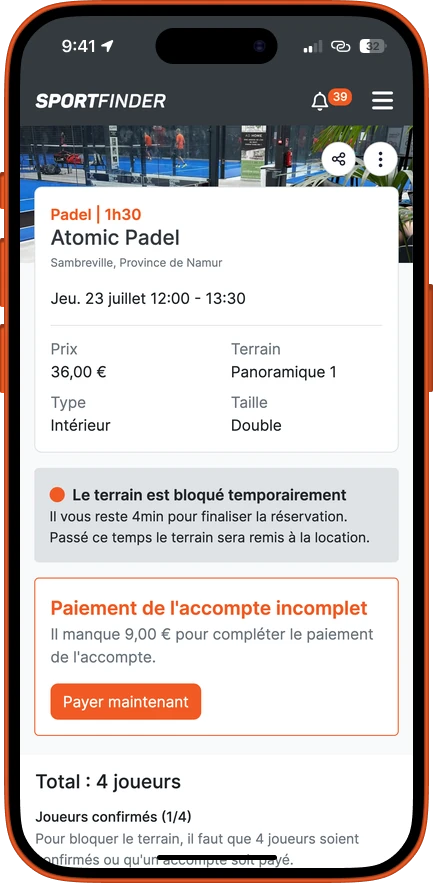
Most systems impose their way of working. SportFinder rests on one rules engine — a value, a condition, a priority — that governs rates, quotas, booking windows and refunds. You learn the logic once and reuse it everywhere. The club arrives pre-configured; the depth is there as a reserve of bespoke, not as a configuration chore.
“I have to be at the club to open, close and switch on.” The unmanned club is not a slogan: the door opens on an encrypted QR code, lighting and the hot water in the showers follow the booking, and everything closes with nobody on site. On standalone hardware the reader at the door validates the code locally — even when the connection drops.
Publish a tournament in minutes: categories by level, gender and age, team entries paid online, duplicate protection, doubles partner search and reminders when registration opens.
How much did you take this month? Which slots stay empty on a Tuesday? Who are your best customers? SportFinder answers with clear dashboards: revenue, court occupancy as a heatmap, period comparisons, top customers and accounting exports. Enough to decide with figures rather than with an impression.
Revenue consumed and revenue taken, against the previous period, with the share of each source.
Occupancy hour by hour, court by court: you see where the holes and the peaks actually are.
Your figures leave the system whenever you want them to — reversibility is something you check before signing.
The market tends to impose a choice: a commission model that brings you players but earns on your takings, or a licensed system that leaves you free but leaves you alone on acquisition. SportFinder combines the two — the complete software plus the acquisition ecosystem. We take a commission on online sales too: it is tapered, bank fees included, and its grid is published. What stays at 0% is the player side.
| Commission model | Licensed software | SportFinder | |
|---|---|---|---|
| What triggers the invoice | A percentage of every booking taken | A software subscription — what applies on top to online payments is specific to each contract | A subscription, plus a tapered, all-in commission on online sales — grid published |
| When the club fills up | The invoice follows revenue | The subscription does not move | The subscription does not move. The commission follows volume — but its rate drops as volume rises |
| Bank fees | To check with the platform | To check with the vendor | Inside the rate, whatever the payment method — no separate transaction-fee invoice |
| What your players pay | A service fee may be added to the court price — to check | To check with the vendor | €0 — no service fee, no cancellation fee |
| Brings you players | Yes — it is the whole point of the model | No, acquisition stays your problem | Yes — directory and open matches, and the players are added to your own database |
This table compares billing models, not companies. No vendor is named, and where a line depends on a particular contract it says “to check” rather than guessing on your behalf — read your own contract and check it against your processor’s public rates. Only the SportFinder column asserts anything. Written 11/08/2026.
SportFinder brings online booking around the clock, level-based matchmaking, payments, unmanned access control, memberships, tournaments and statistics into one back office. For the counter till we recommend Odoo. The product is built around what padel actually is: four players on one booking, split payment, 90-minute slots and P100 to P1000 rankings.
By not treating "the court is free" as the only question. Our engine scores what each booking would leave behind it, on a scale specific to padel, and only puts on sale what leaves the rest of the day sellable — then it relaxes on its own as the date approaches, up to the point where an empty court costs more than a thirty-minute gap.
Yes, and its grid is published. Our commission on online sales is tapered — it drops as your volume grows — and it includes bank fees whatever the payment method, so you get no separate transaction-fee invoice. On the player side it genuinely is 0%: no service fee, no cancellation fee.
The amount is divided between the participants, and each one pays their own share when they join the booking. Nobody fronts the money for the others, and there is no settling up after the match. You can also let one person pay the whole court, club by club.
Yes. Belgian, French and Spanish rankings are handled natively, with the equivalences between federations, so there is no file to import and no level to key in twice. Matchmaking uses them to put players of comparable level on the same court.
Yes. The door opens on an encrypted QR code, lighting and the hot water follow the booking, and everything closes with nobody there. On standalone hardware the reader validates the code locally — even when the connection drops.
We bring over your contacts, bookings, credits, memberships and rankings, and our team runs the migration end to end. You do not start from an empty database, and what it costs depends on how much there is to move.
Four packages from €30 to €220 per month excl. VAT depending on the size of your club, plus the tapered commission on online sales. The whole grid is on our pricing page — it is not behind a form. Going live is a matter of setting up your courts, rates and memberships with you.
A demo built on your club: your courts, your rates, your memberships. We configure one of your rules live.