








Level, comparable between clubs
You set a level range, and the players’ search respects it. Each club keeps its own scale: equivalences link it to a neighbouring club’s, a federation’s or another country’s, in both directions.
The 12:00 slot and the 21:00 slot stay empty: they cannot find four players ready at the same time. Open them up as public matches: the community fills the places, everyone pays their share, and you take payment for a court that would have stayed empty.
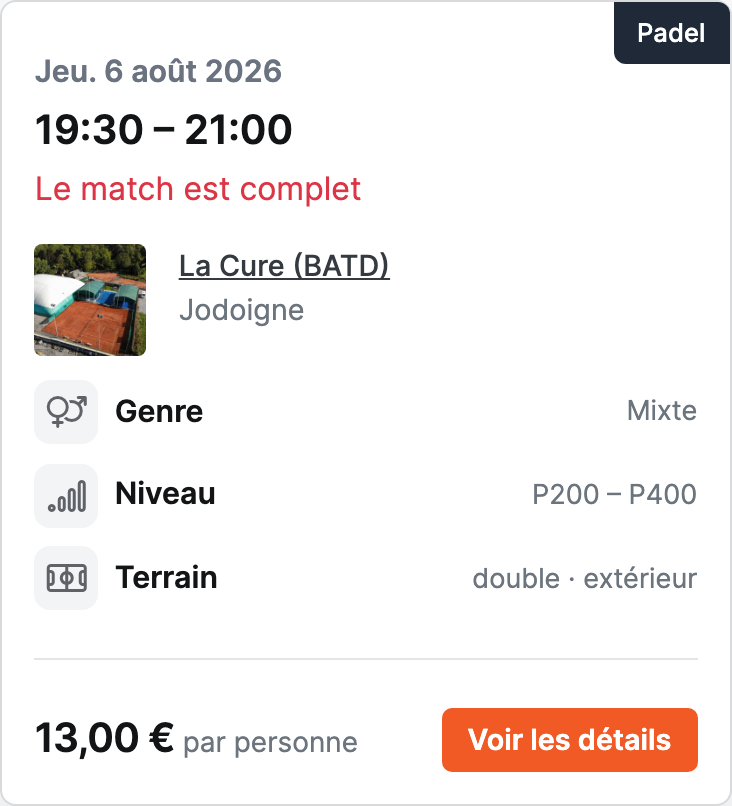
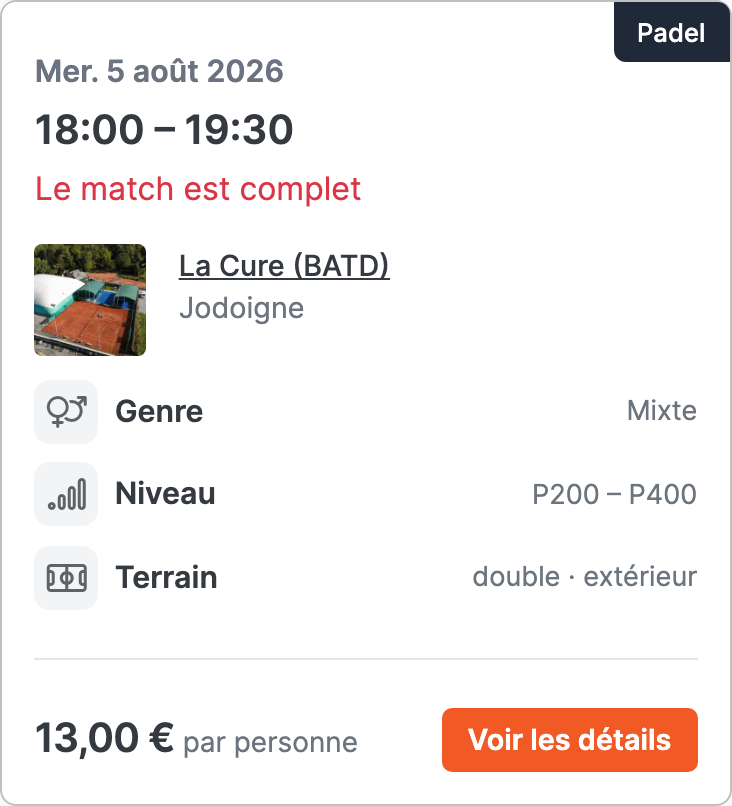
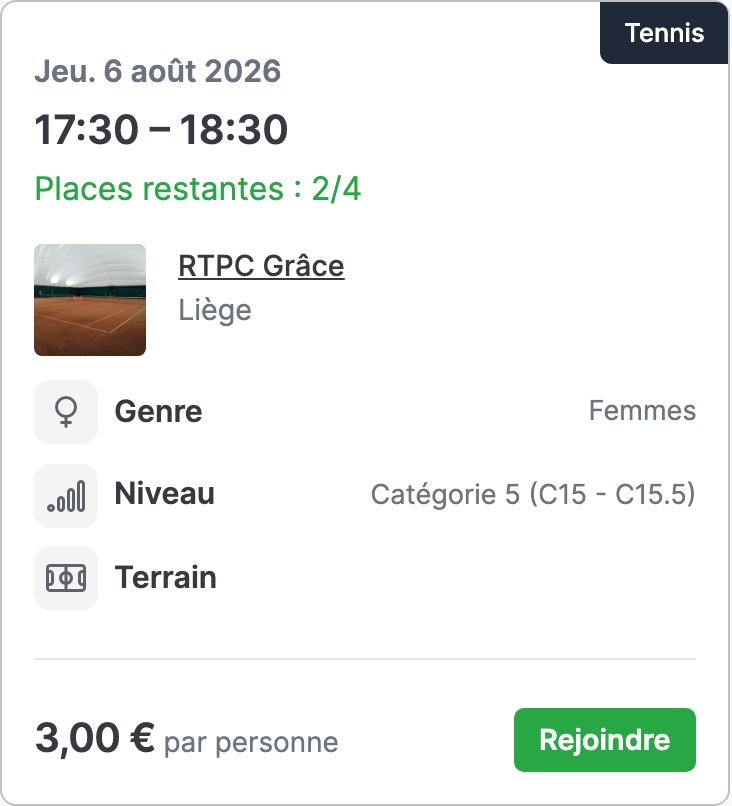
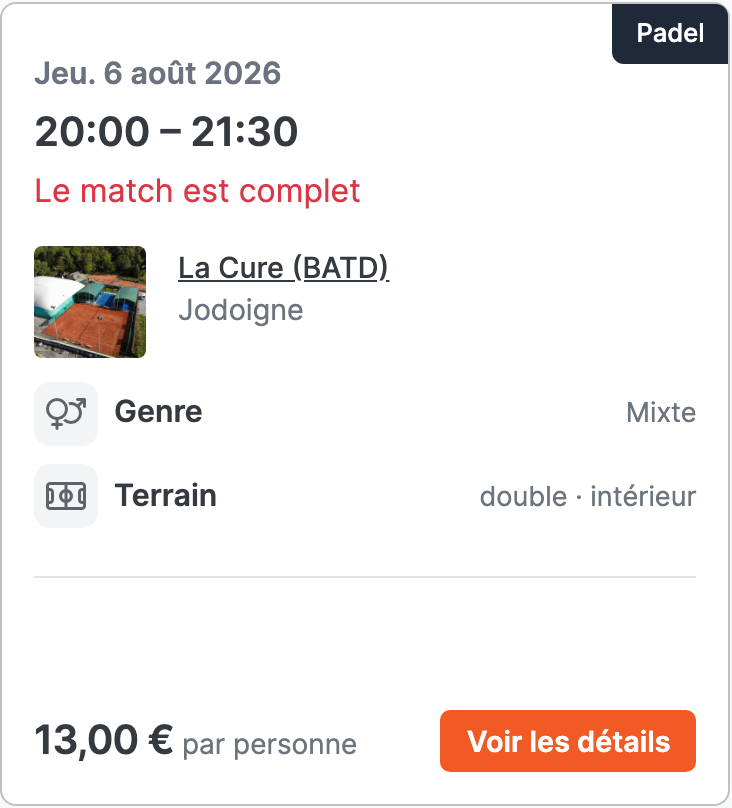
The match directory, in one place for every player — these cards are real matches published on SportFinder.
No separate matchmaking software, no double entry: a public match is a booking with places left in it. The club can launch matches to fill its slots, and any booking turns into an open match from the same screen.
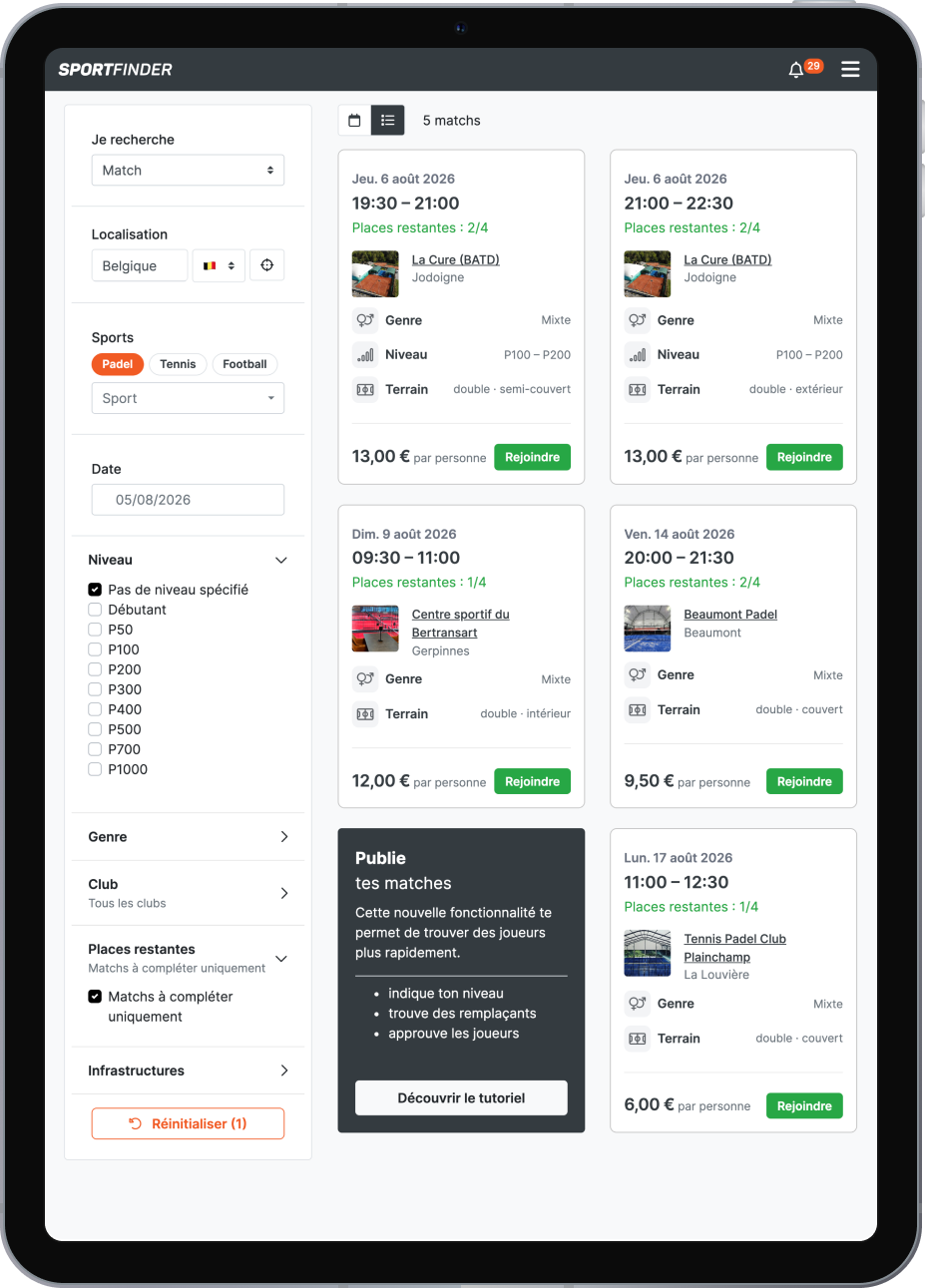
A match only fills well if the players recognise themselves in it. You set the markers, the system does the sorting.
You set a level range, and the players’ search respects it. Each club keeps its own scale: equivalences link it to a neighbouring club’s, a federation’s or another country’s, in both directions.
The organiser states the format and, if they wish, the gender of the match — mixed by default. Markers on display, so the right players end up on the right court.
Two settings, the club’s choice: either a player joins and pays straight away, or every request goes through the organiser, who accepts or declines. Depending on whether you prefer speed or control.

| Common benchmark | Belgium | France | Spain |
|---|---|---|---|
| Beginner | Beginner | Novice | 0.0 – 1.5 |
| Intermediate | P50, P100 | Beginner, Beginner + | 2.0 – 3.5 |
| Confirmed | P200, P300 | Intermediate, Intermediate + | 4.0 – 5.0 |
| Competitive | P400, P500 | Advanced, Advanced +, Elite | 5.5 – 7.0 |
| Expert | P700, P1000 | Expert, Expert +, Elite | 7.5 – 9.0 |
Every country counts differently: Belgium in P levels, France in named tiers, Spain in numbers. A club keeps its own — the equivalences link them in both directions, with no double entry, and a player finds matches at their level even when it is expressed on another scale.

These markers are set club by club — like everything else. Set-ups as particular as those of the Centre Adeps La Mosane or the CTC La Calamine already run on this same engine.
A booking published as a match, a request, an acceptance, a share paid: here is the whole journey, replayed screen by screen in the player app — notifications included.
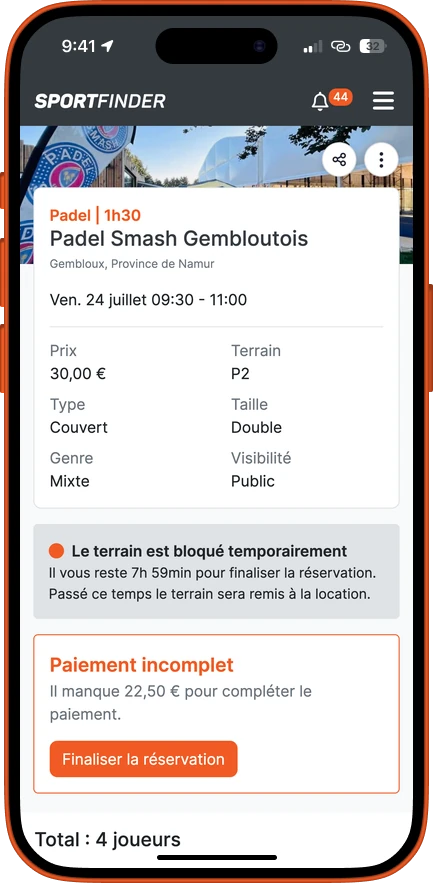
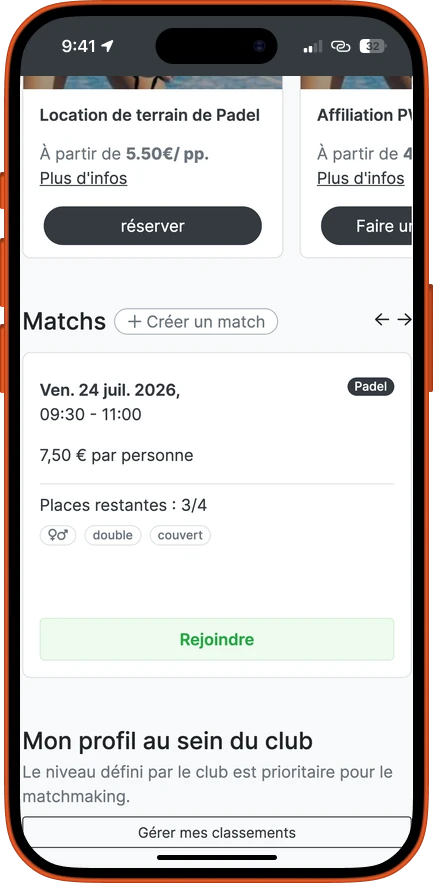
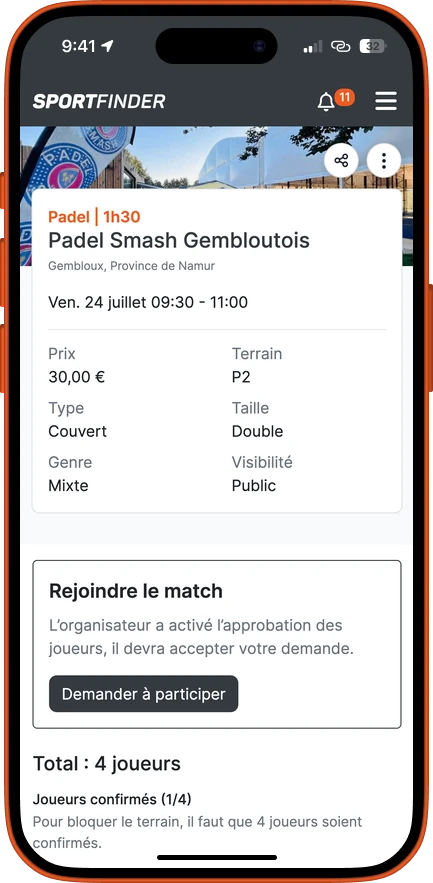
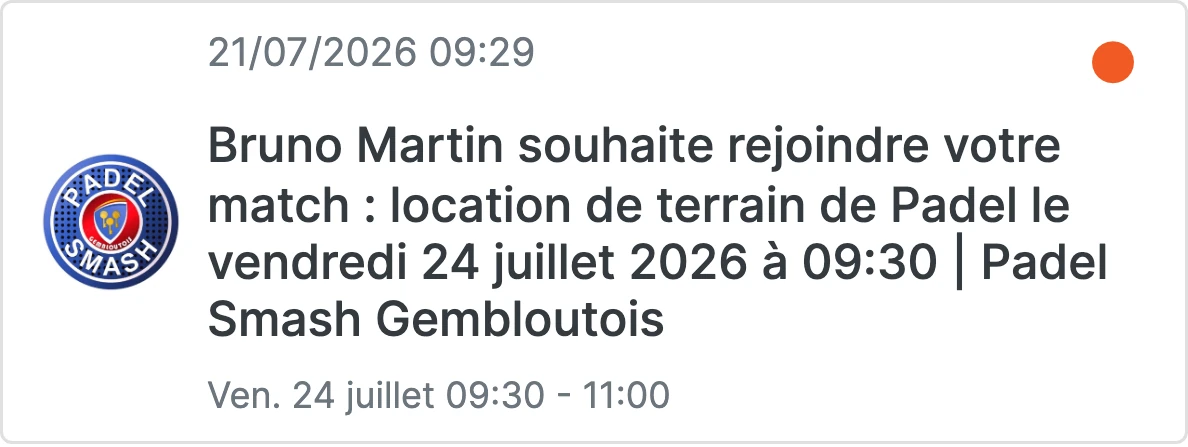
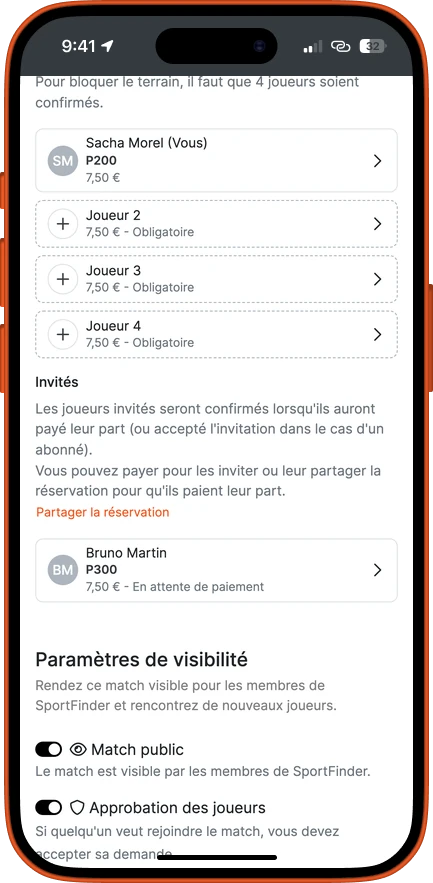
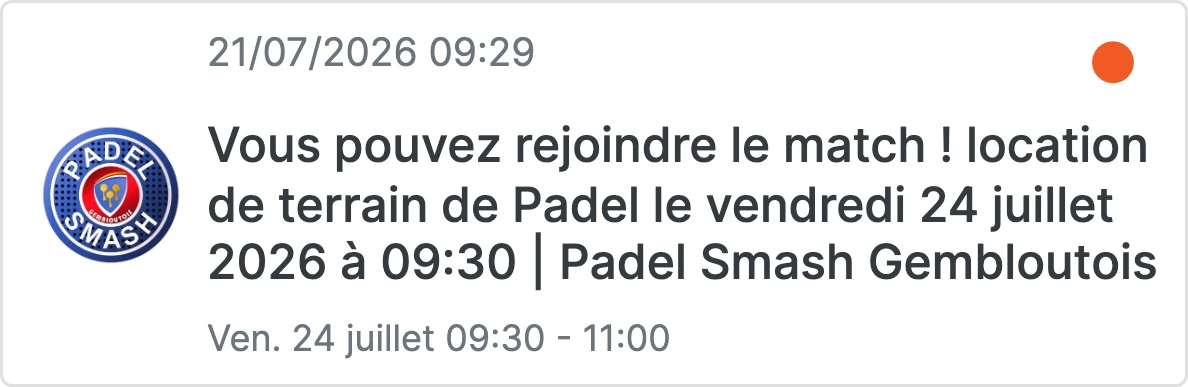
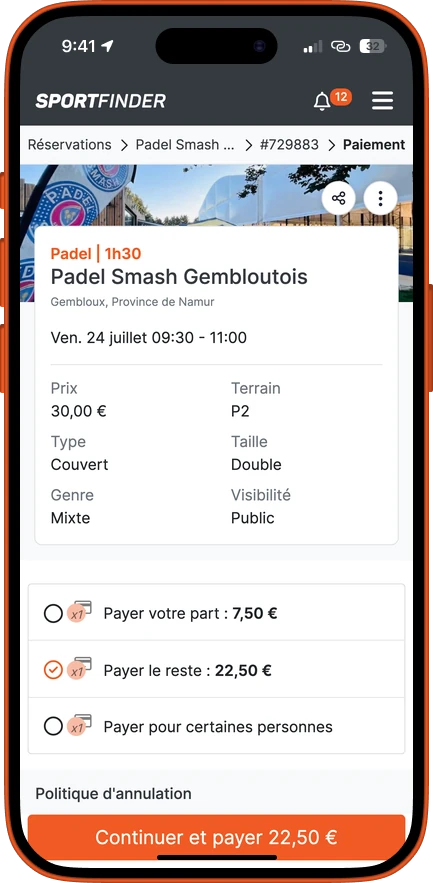
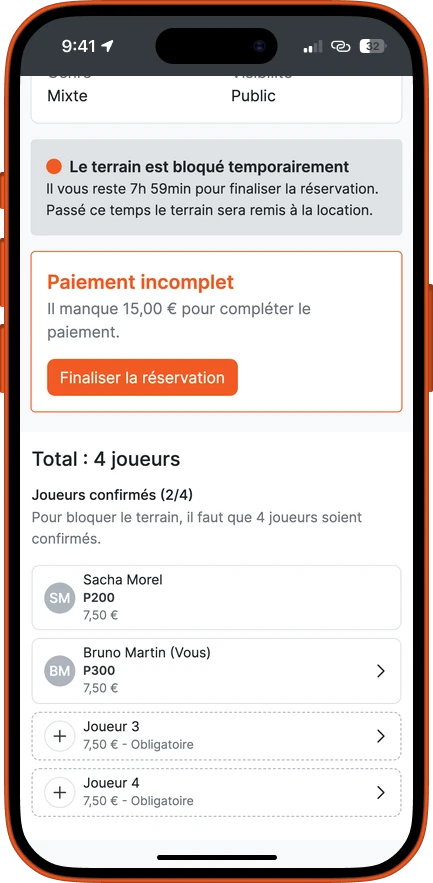
A real journey through the app, replayed end to end on a client club: Sacha publishes, Bruno joins — demonstration personas, not real players.
The classic complaint about matchmaking, from the manager’s side: a court tied up while a team looks for players, with nobody having paid. We tackled it head on. The court is held for as long as it takes to complete the team, then released — and that time shortens as the slot gets closer.
The further away the slot, the more time is left to complete the match; under eight hours, nothing is held any more. Default values, adjustable for your club.
Opening a slot to several teams means accepting that they may go for it at the same time. The system settles it on its own, and cleanly.
A player can no longer make it? Their place goes back to “to be replaced” and becomes available to someone else. The match stays full, the court stays filled, and nobody has to chase a refund.
The slot engine opens the right hours — the ones that keep the rest of the day sellable. Matchmaking fills them: it brings players to the slots nobody was booking, without tying up your courts for nothing. How much is that worth at your club? We work it out in the demo, on your data — not with a percentage lifted from a brochure.
For players, it is 0% in fees: no service fee, no cancellation fee when they leave an open match. For the club, our commission exists, it is degressive and published — which puts us exactly on the same side as you: we only earn when your courts fill up.
It is also what drives us: getting more people playing, more often. Read our mission.
No. A public match is a booking like any other, with places still to fill: you publish it from the same back office, and it appears straight away in the match directory players browse. No double entry, no tool to keep in sync.
You set a level range on the match, and the players’ search filter respects it. Each club keeps its own scale: a system of equivalences makes it comparable with a neighbouring club’s, a federation’s or another country’s — Belgium, France and Spain each have their own default scale, linked in both directions, with no double entry.
No, and that is precisely the sensitive point we dealt with. The court is only held for as long as it takes to complete the team: the time adjusts automatically as the date gets closer, and under eight hours before the slot it is not held at all. These durations are default values, adjustable for your club.
The first to confirm and pay keeps the court; the conflicting booking is refunded automatically, and the player and their partners are told. You never end up with a slot sold twice to sort out by hand.
No. The place reopens for a replacement, and the player who leaves is not penalised: their share comes back to them automatically. The replacement takes over, and the court stays filled.
A share paid online is an online sale: it falls under our degressive club-side commission, bank fees included, like any standard booking. The rates are published on our pricing page. For players, on the other hand, it is 0%: no service fee, no cancellation fee.
Matchmaking is part of our padel club management software, alongside tournaments and 24/7 unmanned access. Your statistics show where the gaps to fill are, and every marker — level, hold, approval — is set club by club. Coming from other software? The switch is supported. And to fill your courts without depending on a marketplace, compare the two models.
30 minutes, your club, your courts: we open an empty slot as a public match during the demo and look together at what it changes.